Your Ad Here
Your Ad Here
Showing posts with label Human Facts. Show all posts

Thursday, January 6, 2011

Amazing Human Printer

The Human Printer, founded by Louise Naunton Morgan, is a group of artists who uses markers to emulate the printing process. The group reproduces photos by painstakingly printing images by hand - dot by dot, in CMYK or B&W to recreate the halftone printing effect of conventional printers.


As explained on the site, The Human Printer assumes the role of the machine and is therefore controlled and restricted by the process of using CMYK halftone created on the computer. The site even goes as far as to list other Human Printer "models," providing a short description of each one's particular printing style and character traits.


Wednesday, November 24, 2010

Human Relationships with Robots

The future is not written yet and who knows whether robots are dangerous or not. What is for sure is that humans, being the curious beings, will develop new advanced generations of robots.

It happens so that people and robots go together in this life side by side, in some spheres of life they are even interchangeable and who knows into what this opposition “Human and Robots” will translate. Robots and humans that live and prosper together…Or robots will realize they don’t need that much…

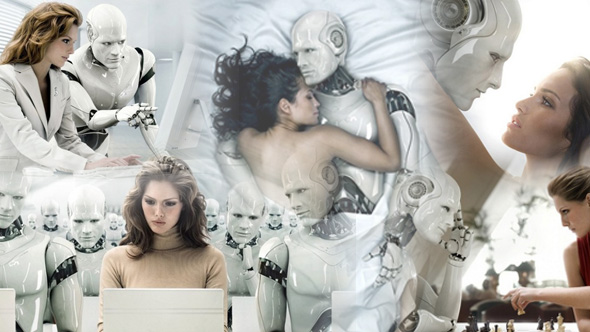
For now it is up to out fantasy to express what we think will happen in human-robot relations in the future. This is a collection of 3d computer generated images of various creative 3d artists that shows their vision. The level of detail of these computer graphics shows that our technology will lead us to the point where these fantastic photographs will be the reality.


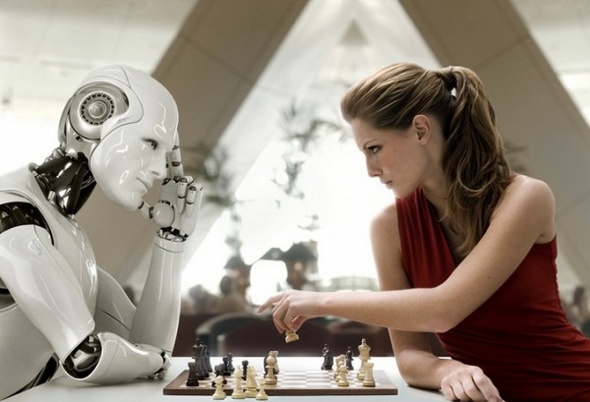
Who will win in this game of chess? When there is the opposition of the mechanical creature and the human intellect it is not easy to predict the outcome of the game. You can make books, but you will never be sure about the results, they are unpredictable.


In the process of the humming work robots can be of a great use for people. With them less time would be spend for the most complicated tasks and the crunch times would take place not so often. The only question that is left รข€“ to find such a robot.


I’m not sure that it is more pleasant to work in the company of robots, but it definitely has certain advantages. One of the main is the high efficiency of the process of work, furthermore not a lot of time is spent for the idle talks, spreading silly rumors and gossiping.


This robot looks like a housekeeper who takes care of everything around. In its duties are household activities and it copes with all the everyday duties without any difficulties in a short time and without procrastinations.

Some time ago, when I was a human being I was dreaming about the perennial youth, the thoughts that were so peculiar for every woman. My dreams turned into life immediately after my death and I have obtained the desired eternity: now I’m a robot.


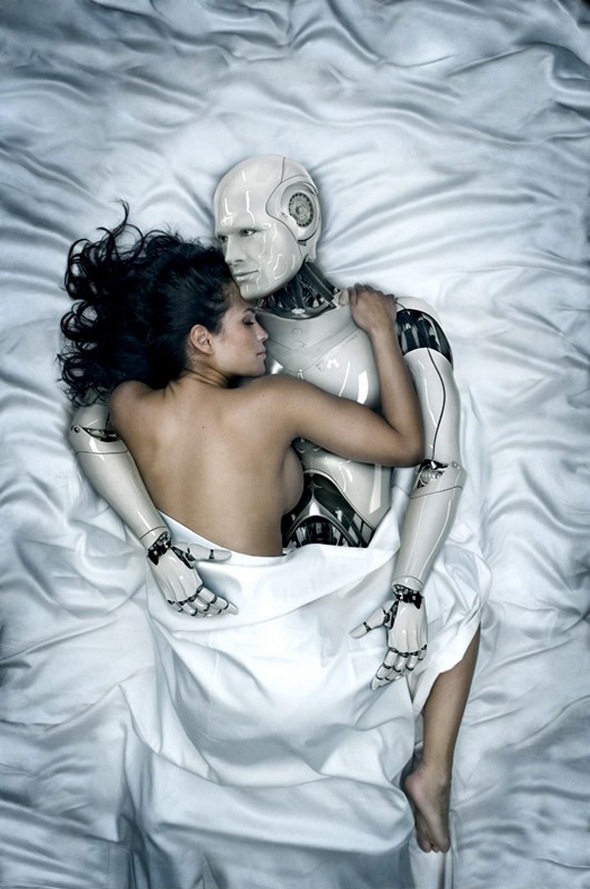
When you touch gently the lips of your beloved your heart begins to beat speedily, the mind is hazed with pleasant feelings and you fly away. These minutes can fly not so that you’d notice, but they are so sweet and inimitable.

Wednesday, July 28, 2010

Having a profound conversation can boost happiness levels, but trivial chatter can be depressing, scientists say.

Psychologists investigated whether happy and unhappy people differed because of the types of conversations they engaged in.

Volunteers wore an unobtrusive recording device to monitor conversations with friends and colleagues for four days.

Researchers then listened to the recordings and identified them as trivial small talk or substantive discussions.

In addition, the volunteers completed personality and wellbeing assessments.
Reporting the findings in the journal Psychological Science, the researchers said the recordings revealed some startling findings.

Greater wellbeing was related to spending less time alone and more time talking to others. The happiest participants spent 25 per cent less time alone and 70 per cent more time talking than the unhappiest.

But the researchers were surprised to discover that the type of conversations people took part in also affected their happiness levels.

The happiest participants had twice as many deep and meaningful conversations and one third as much small talk as the unhappiest.

Matthias Mehl, an assistant professor of psychology at the University of Arizona, said: "These findings suggest that the happy life is social and conversationally deep rather than solitary and superficial."

The researchers conclude that profound conversations may have the potential to make people happier.

They said: "Just as self-disclosure can instill a sense of intimacy in a relationship, deep conversations may instill a sense of meaning in interaction with partners."

Tuesday, July 13, 2010

1 Out Of 7 Latina Teens In The Usa Try Committing Suicide, lets discuss why we think why


By Courtney Yager
CNN

NEW YORK (CNN) -- Twelve-year-old Francisca Abreu was anxious. It was February 20, 2007, and she laid her head down on her desk in her seventh-grade science class.

Trapped between two worlds, Francisca Abreu became depressed. At 12, she says she wanted to kill herself.

"I was crying; I was very depressed. I had written a note to myself," Francisca remembers. "I just said I can't do this anymore. I want to kill myself."

Francisca's school called home, and her mother, Isabel Valdez, learned for the first time that her daughter was in serious trouble.

"I never told her," says Francisca. "I never bothered her; she probably never bothered to notice."

Such a disconnect between mothers and daughters is what Dr. Luis Zayas, a psychologist at Washington University, suspects is leading an alarming number of Latina teenagers to want to end their lives.

One out of every seven Latina teens, or 14 percent, attempts suicide according to a 2007 Centers for Disease Control and Prevention survey of high school students. And Latina high school students have higher attempted suicide rates than white non-Hispanic (7.7 percent) or black non-Hispanic (9.9 percent) girls their age, the CDC reports.

Zayas has spent the last 25 years trying to find out why. He says the typical Latina teen who attempts suicide is 14 or 15, the daughter of immigrant parents, lives in a low-income setting and is caught in an intense battle with her mother over Latino and American cultures.

Research conducted by Zayas has found the girls' parents hold strictly to traditional Latino values, while teens who grow up in America learn "very different models about what girls should do, can do and are permitted to do."

Zayas is nearing completion of a five-year study of more than 200 Latina teenagers who live in New York City. More than half of those studied have attempted suicide, including Francisca Abreu, who is now 15. Francisca talks about falling into a deep depression »

In 1997, Francisca's mother, Isabel, left the Dominican Republic for the promise of work in the United States. Desperate to find a better life for her three children -- she left them behind. Francisca, who was 3 at the time, says she was devastated.

"I used to tell her, you always say you're going to come but you never do. You always say you're going to call but you never do," Francisca says. "I used to be very depressed because I thought she wasn't going to come."

Four years later, Isabel went back to get Francisca and her brothers to bring them back with her to the United States. But Francisca says life with her mother in the Bronx wasn't what she thought it would be. Her mother worked three jobs, and Francisca barely saw her.

As she spent time with her new American friends, the distance grew between Francisca and her mother. When her mother wasn't at work, Francisca says they were fighting.

"There are many girls who are well-behaved," Isabel says. "But there are others who are on the wrong path. They like to flirt. They like hanging out. They like to stay out late. These are not the friends I like for my kids."

Francisca says her mother wanted her to stay home, learn how to cook and clean the house. She says she wasn't allowed to hang out with her friends.

"I did want to do what I want, be outside, not too late, but be outside period. Be able to go to the pool, regular stuff like other kids," Francisca recalls.

The conflict between mothers and daughters is what Zayas says is driving many of the Latinas he has studied to the brink. Francisca reads her poem

"Teenagers have certain freedoms; they don't need to consult with their parents to make certain decisions," Zayas says. "That's the culture that's here, and inserted in that is the Latino family that says the family is much more important than the individual."

"I would cry about my dad, not being with him. How I missed my country. How I wish I wasn't like this with my mom, or my mom wasn't like this with me," Francisca recalls. "Like she wouldn't be mean to me, [she'd] tell me mean stuff like 'I wish I could put you back in my belly. ... I wish you weren't born.' "

Isabel says she remembers a difficult child who wouldn't open up.

"She would throw things, stomp her feet. When she got home, all she wanted to do was sleep. She didn't talk and was rude to her brothers and me," Isabel says. "Maybe I wasn't very understanding with her. I don't know."

Trying to escape the pain, Francisca made a desperate choice and decided to take some of her mother's pills.

"I was tired of being another burden in my mom's life," Francisca says.

But the pain didn't go away. A year later, Francisca was admitted to a psychiatric hospital after a teacher found the note she wrote at school. Three days later she was released and started counseling.

Several weeks later, Francisca met 15-year-old Xavier Cardona at school. She says their connection was instant.

"The first time we were ever together, he hugged me, and I felt like, 'Oh my God, that felt so good.' I felt so safe, I felt secure," Francisca says. "It felt good to have someone hug you that way with such meaning."

Breaking all her mother's rules, she skipped school to spend time with Xavier. Then, two days after her 14th birthday, Francisca came home with devastating news -- she was pregnant.

"I felt like I was going to die," Isabel remembers. "I was embarrassed when it came to the rest of the family. What were they going to say? That I was the one who didn't take care of her?"

In November, Francisca gave birth to a baby girl. She named her daughter Destiny, and slowly she says she began to understand her mother better.

"All she did was be a good mother, sacrifice her life for us," Francisca says. "That's all she did."

Today with the help of therapy, Francisca says she's learning to cope with her depression. In June, she shared her experiences about growing up Latina at a fundraising gala for her counseling center. Before hundreds of people, she thanked her mother.

"I came to this country not knowing the language, the people or how it is here," Francisca told them. "But at the end of the day, my mom was my biggest support."

Francisca says she now understands her mother, and Isabel says she understands the struggles of growing up Latina in America.

"At least now she knows I tried to do the best I could," Isabel says. "Times change. My times are different from hers, and I have to understand that.

Girl Grows New Kidneys

A girl has stunned doctors by growing two new kidneys to replace ones that had failed and left her seriously ill.


Five-year-old Angel Burton went for surgery after being beset by kidney problems since birth.

But surgeons at Sheffield Children's Hospital were astonished to find she had a pair of perfectly-formed organs sitting on top of the old ones.

Furthermore, the extra organs had taken over the work of the originals - so instead of suffering kidney failure, she could look forward to a bright, healthy future.

Angel's mum, Claire Burton, told the Daily Mail: "It's a real miracle. We're just so grateful to have Angel back to her happy, healthy self."

She said the surgeon told her he was "stunned" regular scanning over a five-year period had failed to pick up on the extra organs.

It is thought they were not detected as the new kidneys were sitting just above the originals and tests showed them as one.

Surgeons cut open girl, to fix failing kidneys only to find two new ones growing in their place

Angel, from Louth in Lincolnshire, suffers from duplex kidney, a rare condition where the organs are fused together in the middle. They either share or have their own ureters taking urine to the bladder.

In an even rarer occurrence, both of the organs were duplex, giving her four kidneys and four ureters.

Angel's health deteriorated almost as soon as she was born.

After being diagnosed with bilateral reflux - which means urine was leaking into and infecting her kidneys - a scan had revealed the organs had been badly damaged.

It was during an operation to create an artificial valve in October 2007 that doctors found the extra kidneys.

Angel is now eight and on course to make a full recovery.

Source: http://uk.news.yahoo.com/5/20100518/tuk-docs-astonished-as-girl-grows-new-ki-45dbed5.html

Non-african Humans May Share Dna With Neanderthals

Hey Good Lookin': Early Humans Dug Neanderthals
by JOE PALCA

Be careful whom you call a Neanderthal. You may be one yourself. Or at least you may have Neanderthal ancestors.

That's the conclusion of a study being released Thursday that examined DNA extracted from Neanderthal bones more than 35,000 years old.

More Than A Handshake?

There's little question that modern humans and Neanderthals bumped into each other once upon a time.

"The archaeological record shows they overlapped between about 30,000 and 80,000 years ago," says David Reich, a geneticist at Harvard Medical School.

There was some fossil evidence that they may have done more than shake hands in passing, but the initial genetic evidence suggested otherwise.

"And so the big open question was whether they exchanged genes during that time when they overlapped in the Middle East and in Europe," he says.

To find out whether the two human species interbred, scientists from the Max Planck Institute for Evolutionary Anthropology in Leipzig, Germany, launched an audacious effort to sequence all 3 billion letters of Neanderthal DNA. As hard as it may be to believe, fragments of DNA can survive in bones that are more than 30,000 years old. New techniques can sequence those fragments, and new software can line the fragments up.
------------------------------------------------------------------------------------------------
Neanderthals Crib Sheet
Compared with modern humans, Neanderthals were stocky and had heavy brows and protruding jaws. Also, they probably had reddish hair and pale skin.
They died out about 30,000 years ago.
They resided in Europe and Asia.
Neanderthals wore jewelry and makeup.
A caveman Chatty Kathy? Perhaps. Neanderthals may have been able to talk.
The main strategy for finding whether modern humans and Neanderthals exchanged genes was to compare the Neanderthal DNA with DNA from modern humans — some whose ancestors had remained in Africa, and others who had migrated to Europe, Asia and the New World. If the Neanderthal DNA was more similar to the non-African DNA, it would indicate that Neanderthals contributed their genes after the first modern humans migrated out of Africa.

------------------------------------------------------------------------------------------------
Reich says that's what they found.

"The non-African is more closely related to the Neanderthal," Reich says. "Quite definitely. Highly statistically significantly overwhelming evidence that they're more closely related on average to Neanderthals."

In other words, Reich and his Leipzig co-authors are totally sure that Neanderthal genes found their way into modern humans when the two species intersected. They report their findings in the journal Science.

"The simplest possible explanation is that it occurred once," Reich says. "But it very easily could have occurred on multiple occasions. Perhaps it's likely that it occurred on multiple occasions."

Reich says it's hard to pin down exactly how much DNA Neanderthals contributed to modern humans. "We estimate about 1 to 4 percent of the genetic ancestry of non-Africans is from Neanderthals," he says.

'Neanderthal' Is No Insult

And just to be clear: Reich says there's no stigma to have a bit of Neanderthal heritage.

"Absolutely not," he says. "In fact, people who have Neanderthal DNA have done just fine in our society."

Now that scientists have the sequence, they can start looking for regions of DNA that differ between Neanderthals and humans.

"And then, once the regions are identified, [we can] look to see what genes are here, what biological sense can we make of this," geneticist Richard Green say.

Green recently left Leipzig to join the faculty of the University of California, Santa Cruz. He says they've already begun to identify genes that have changed — for example, genes that control the tails on sperm, genes that are involved in wound healing, genes that affect the shape of our hair.

Learning About Ourselves

Along with the chimpanzee genome completed a few years ago, the Neanderthal genome will help scientists like Green pin down the genetic changes that made modern humans human.

"Which one of these happened very recently, since we split even from Neanderthals? And which ones of these are much older and happened in the 6 million years or so since we diverged from chimpanzees?" Green says.

Green says for the moment, the real value of the Neanderthal genome is what it tells us about how modern human evolved. John Hawks, an anthropologist at the University of Wisconsin, agrees.

Hawks compares this finding to the first time humans were able to look back at the Earth from beyond Earth's orbit.

"We can say, 'Here's a picture of what we are from the outside — from the distant past,' " says Hawks. "And we can use that to get a new picture of what we are. It's amazing. I can't express how I feel this morning. It's really cool."

Human Magnet Contest in Vietnam

Human Magnet Contest
in Vietnam

I’m sure you have at least one friend that claims he is a spring of magnetic energy, just because he can balance a spoon on the tip of his nose, but in Vietnam,this kind of phenomenon is taken seriously.

Yesterday, during a ceremony to celebrate 12 years since the inauguration of the Vietnamese department for the research and study of energy, human magnets from all over Vietnam gathered in Hanoi, to show off their skills. Men and women covered with spoons, forks, dinner plates and metal weights walked around proudly, displaying their powers.

The most impressive of them all was Ta Quang Thanh, who managed to keep a 42 kilogram stone slab, stuck to his body, thus breaking all national records.

Monday, March 29, 2010

Human life is successful only when

Human life is successful only when:

1) nothing remains to be done, (krta-krtya)
2) nothing remains to be known and (gyaat-gyaatavya)
3) nothing remains to be attained. (praapt-praaptavya)

You can attain this state of supreme peace and bliss where nothing remains to be done, to be known and to be attained. Everyone can attain it, whether he is virtuous or sinful, learned or ignorant, worth or unworthy, rich or poor, whether he holds a degree or not. Even if you die today, you need not grieve as the aim of life would be attained.

If out of these three mentioned above, if any one condition is satisfied, the remaining two will be naturally satisfied.

When will nothing remain to be done?

Nothing will remain to be done when you you do nothing for yourself. If you do for yourself, the work can never be complete. It is because the action has a beginning and an end, whereas you remain the same. So something will remain to be done as long as you do for yourself. Something will remain to be done for endless births. It can never be completed. But nothing will remain to be done if you work only for others. In this way when you do nothing for yourself, nothing will remain to be done.

When will nothing remain to be known?

When you know the Self, nothing will remain to be known. But if you don't know yourself, then in spite of all the knowledge in the world of scriptures, philosolphy, languages, etc, something will remain to be known.

When will nothing remain to be attained?

When you attain God (Bhagwaan) thereafter nothing will remain to be attained. Nothing can be attained and acquired by the body, senses, mind, intellect and ego for the Self, as the Self is the illuminator of them all.

You can attain the state of supreme peace and bliss in which nothing
remains to be done, to be known and to be attained.

Tuesday, November 17, 2009

The snow white phenomenon


By: May Rostom

I was looking at my baby pictures and wasn't really surprised to see me in the "princess" dress, you know the puffy pink dress we were all forced to wear to weddings or fancy events.

As usual my mind started to drift, are we being fed the wrong information since our childhood? My mum told me that whenever I was asked what I wanted to be when I grew up I'd always reply Barbie.

She was my idol; the girly airhead, bleach blond hair, perfect sports car, hot husband and sexy outfits! As I grew up I never met any of these criteria.

As I observed many of the girls around me I noticed they all shared pretty much the same interests , a tanned tall handsome prince (or rich will be just as good) with a white English horse (now exchanged for an also English Jaguar) that comes from a long line of kings and queens (nowadays traded for doctors).

Did watching too many cartoons, mess with our expectations? Do we expect to meet Mr. Right at the ball (aka our best friends wedding)?

Will Losing a slipper, or kissing a frog make it happen?! What about our Middle Eastern background which most of the time either prevents us from going to the ball in the first place or leaving the party early cause "you don’t want people to talk".

Assuming we did go and actually stayed after 12, will we be happy if we lose that slipper or sweat it out cause it cost $200? And you know the saying "you have to kiss a lot of frogs before you find your handsome prince"?

What if there's no prince and all there is are just frogs? What if Mr. Right couldn’t make it to the ball because he had work to finish or what if he did show up but forgot to shave or brush his hair?

Will you still wait for a better opportunity to pop up or will you take him for what he is and what he'll be? Are we hooked up on happy endings, princess gowns, castles and prince charming that we can't accept reality anymore?

Is it even possible to love at first sight? Some people chase after loved ones for years and can't seem to get the job done! Will snow white always marry her prince?

Not if he's already taken or he has some fear of commitment. How come snow white didn’t fall for one of these dwarfs, the little angels that put a roof over her head, gave her food and shelter?

Who said ideal love was a handsome prince that came from a royal family or a gorgeous size zero princess who lived in a white castle?

Why do we always fall for the wrong guy and refuse to look right in front of us?

Is it because Disney gave us all these unrealistic expectations and a false image of how things should be like?

And why didn’t anyone warn us before hand! At least when a boy grabs a toy off the shelf its usually something that exists like a car or a tool box, maybe in the near future the toy industry should manufacture little blow dryers , tweezers and pimple cream!

As these questions remain unanswered all I can think of is when did we stop appreciating what we have and start to think that the grass is always greener on the other side?

We simply can’t enjoy the little gestures any more because compared to what we've seen on TV they're nothing. We can't always expect things to be perfect because in real life they aren’t; they're the closest thing to perfect.

So don’t wait for your leg to curl on your first kiss, wake up and look around this is as good as it gets so grab it and make the best out of it!

Social Hypocrisy


By May Rostom:

"Hey how are you, how's everything going?"Then a stupid smile on their faces is what I get when someone that I haven’t seen in quite a while says when I run into them! Sub consciously I reply with "I'm fine" and just repeat what they said all over again , give them the "get the hell out of here" smile and start walking ! I won't say I don’t do it because we all do, it's like no one has time for even small talk anymore.

All this is fine by me but what really gets to me is the "give me your number, we should hang out sometime" phrase.

It usually starts by the other person saving your number on their cell like its some sort of directory and never actually calls you to hang out (and you're not that keen on hanging out with them either , admit it!) but what's really funny is the next time they see you they'd be like "how come you didn’t call me?" .

Is this miscommunication or mass communication? Is this phrase a new way to stay in touch with the largest group of people you've come across in your lifetime or do they really want to catch up? I can't seem to remember the last time I ran into someone I haven’t seen for a while and got a useful piece of information like I'm married or I just got fired today! It's like no one is interested in what you've been up to but still asks you to make you feel important and no one has the time to summarize how things are going in 5 minutes.

When did the regular hi and wave run out of style? At least it's more convenient for the both of you, where you don’t want to hear what they have to say and they know that but say it anyways.

I remember the younger me being able to talk to anyone about anything for any amount of hours and never get bored but now life's hectic and stressful and when someone asks you what's been up you automatically reply fine even if things aren’t going your way.

What if someone did reply "not fine", how would one reply to that? And do you really want to listen to this person complain about it for the next 15 minutes while you just stand there helpless?

As we grow older, do we lose the interest to talk or do we lose the interest to small talk?

Making friends is a hard thing to do and maintaining friendships is even harder, but how can we balance both without being hypocrites??

Very simple, when you see an old friend tell them how much you've missed them and mean it, ask them what they’ve been doing recently and seem interested and if you take their phone number CALL THEM .

So next time you try to pull a stunt like that again, remember I BLEW YOUR COVER!

Diet right !


No matter how old we are, what size we fit in or our gender, we all pursue a better image. People change diets like they change shoes.

Due to the increasing number of over weight people, a whole range of diets have been introduced. One of the most famous diets we all talk about on our lunch break is the Atkins –low carbohydrate-diet.

This diet is also known to be one of the many "fad diets" there are out there which refers to a peculiar diet or eating pattern.

Of course most of these diets lack important nutrients our body needs like protein, fat soluble vitamins (vitamins a d, e, and k), minerals and eventually energy therefore preventing our bodies from growth or development.

These diets depend mainly on testimonials rather than scientific evidence.

So what makes a diet healthy? Our bodies need macronutrients to function properly; these nutrients are proteins, carbohydrates and fats. They cannot be excluded out of any diet, even detoxifying diets should include these 3 macronutrients and so this could help us identify fad diets.

A fad diet usually promises fast weight loss and delivers but what they won't tell you is that most probably you will gain all of this weight back if not more.

There's no such thing as a" get thin quick" permanent solution.

When following a fad diet you will lose weight in the form of muscle tissue since the body breaks down the proteins stored in the muscles to provide the energy you need and once you stop you will gain this weight back most likely in the form of fat so basically you're replacing the muscles in your body with fat.

In a healthy diet, your source of energy will be provided from your food since it's not an extremely low caloric diet and from the breaking down of fat and not muscles that’s why dieticians recommend diet AND exercise to break down fat and build up muscles.

So next time you decide to go on a diet, ask yourself these questions:

Does it promise fast weight loss?
Am I going to gain all this weight back?
Are there any macronutrients missing?
Is it an extremely low caloric diet?

If you answer yes to any of these questions, you should re-consider your decision and visit your dietician.

Wednesday, October 7, 2009

Staring at breasts is a workout


Ten minutes of staring at female breast equals thirthy minutes of doing pushups and lifting weights.

If you hate exercise, but still want to look good, stare at women's breasts for at least ten minutes every day. The study of German scientists shows that ten minutes of staring at female breast does the same thing for men as half an hour of pushups or weight lifting, international media reports.

The study lasted for five years and it was attended by more than 200 men. It was led by Dr. Karen Weatherby, who observed how viewing women's breasts causes faster heart rate in men, leading to increased circulation, improved blood pressure and reduced heart problems. It basically equals a 30-minute workout at the gym.

- Our research indicates that daily ‘staring’ can reduce the risk of heart attacks and strokes by half. We believe that consistent work can extend the life of men from four to five years - said Weatherby.

Monday, October 5, 2009

Did You Know

A person cannot taste food unless it is mixed with saliva. For example, if strong-tasting substance like salt is placed on a dry tongue, the taste buds will not be able to taste it. As soon as a drop of saliva is added and the salt is dissolved, however, a definite taste sensation results. This is true for all foods. Try it!

-A giraffe can clean its ears with its 21-inch

-The only 15 letter word that can be spelled without repeating a letter is "uncopyrightable ".

-Your stomach has to produce a new layer of mucus every two weeks or it will digest itself.

-If you toss a penny 10000 times, it will not be heads 5000 times,but more like 4950. The heads picture weighs more, so it ends up on the bottom.

Magnets used to clean up bloodstream

Sepsis, a potentially lethal disease caused by a systemic microbial infection that spreads via the bloodstream, is responsible for more than 200,000 deaths per year in the U.S. alone. Existing treatments can be ineffective but researchers in the Vascular Biology Program at Children's Hospital Boston have come up with a novel first line of defense - the use of magnetism to quickly remove pathogens from the blood. The new blood-cleansing device, developed by Chong Wing Yung and Don Ingber is described in the journal Lab on a Chip.

The system works by drawing the patient's blood and adding tiny magnetic beads (coated with antibodies) to it. The blood and bead mix is then run through a microfluidic system in which two liquid flow streams run side by side without mixing - one containing blood, the other a saline-based collection fluid. The beads bind to the pathogens and a magnet then pulls them (along with the pathogens) into the collection fluid, which is ultimately discarded, while the cleansed blood in reintroduced into the patient.

Tested with contaminated human blood, a device with four parallel collection modules achieved an impressive 80 percent clearance of the fungi Candida albicans in a single pass, at a flow rate and separation efficiency that would be viable for clinical applications. The researchers estimate that a scaled-up system with hundreds of channels could cleanse the blood of an infant within several hours.

"This blood-cleansing microdevice offers a potentially new weapon to fight pathogens in septic infants and adults, that works simply by removing the source of the infection and thereby enhancing the patient's response to existing antibiotics," noted Ingber, who says the next phase will be to test the device in animals

Thursday, October 1, 2009

Getting Little Sleep May Be Associated With Risk Of Heart Disease

Sleeping less than seven and a half hours per day may be associated with future risk of heart disease, according to a new article. In addition, a combination of little sleep and overnight elevated blood pressure appears to be associated with an increased risk of the disease

"Reflecting changing lifestyles, people are sleeping less in modern societies," according to background information in the article. Getting adequate sleep is essential to preventing health conditions such as obesity and diabetes as well as several risk factors for cardiovascular disease including sleep-disordered breathing and night-time hypertension (high blood pressure).

Kazuo Eguchi, M.D., Ph.D., at Jichi Medical University, Tochigi, Japan, and colleagues monitored the sleep of 1,255 individuals with hypertension (average age 70.4) and followed them for an average of 50 months. Researchers noted patients' sleep duration, daytime and nighttime blood pressure and cardiovascular disease events such as stroke, heart attack and sudden cardiac death.

During follow-up, 99 cardiovascular disease events occurred. Sleep duration of less than 7.5 hours was associated with incident cardiovascular disease. "The incidence of cardiovascular disease was 2.4 per 100 person-years in subjects with less than 7.5 hours of sleep and 1.8 per 100 person-years in subjects with longer sleep duration," the authors write.

Patients with shorter sleep duration plus an overnight increase in blood pressure had a higher incidence of heart disease than those with normal sleep duration plus no overnight increase in blood pressure, but the occurrence of cardiovascular disease in those with a longer sleep duration vs. those with a shorter sleep duration was similar in those who did not experience an overnight elevation in blood pressure.

"In conclusion, shorter duration of sleep is a predictor of incident cardiovascular disease in elderly individuals with hypertension," particularly when it occurs with elevated nighttime blood pressure, the authors note. "Physicians should inquire about sleep duration in the risk assessment of patients with hypertension."

Interesting Facts about the Brain

# Your brain uses 20% of your body's energy, but it makes up only 2% of your body's weight.

# Your cerebral cortex is about as thick as a tongue depressor. It grows thicker as you learn and use it.

# Your brain is about 1300-1400 cubic centimeters in volume, about the size of a cantaloupe and wrinkled like a walnut.

# The brain feels like a ripe avocado and looks pink because of the blood flowing through it.

# Your brain generates 25 watts of power while you're awake---enough to illuminate a light bulb.

# A newborn baby's brain grows almost 3 times in course of first year

# Humans have the most complex brain of any animal on earth.

# Your brain is divided into two sides. The left side of your brain controls the right side of your body; and, the right side of your brain controls the left side of your body.

# Toxins in commonplace items such as carpeting and shower curtains may be contributing to memory loss over time?

# Overexposure to aluminum compounds—in foil, cookware, deodorants, antacids, toothpaste—can affect brain function

# Lavender can help you sleep

# A cooked potato can jump-start your brain when you're feeling foggy.

# The essential oil of jasmine can quickly restore mental alertness

# Eating foods rich in vitamin E, beta-carotene, and vitamin C may help lower your risk of Alzheimer's disease.

Interesting facts about HUMAN BODY


1 ) HEART beats 1,03,689 times.
2 ) LUNGS respire 23,045 times.
3 ) BLOOD flows 16,80,000 miles.
4 ) NAILS grow 0.00007 inches
5 ) HAIR grows 0.01715 inches
6 ) Take 2.9 pounds WATER (including all liquids)
7 ) Take of 3.25 pounds FOOD.
8 ) Breathe 438 cubic feet AIR.
9) Lose 85.60, BODY TEMPERATURE.
10 ) Produce 1.43 pints SWEAT.
11 ) Speak 4,800 WORDS.
12 ) During SLEEP move 25.4 times 


When was the last time you took a moment and celebrated your body? Not because it's well built or attractive by society's standards-- but because it's an impressive piece of functional art. We've assembled some interesting facts that will help you appreciate your body and keep you motivated to take care of it.

Boost your burning power. Did you know that for every 1 lb of muscle you gain, your body burns an extra 50 calories a day? If you can turn at least 5 lbs of extra "fat" into muscle, you will automatically burn an additional 250 calories per day.

A mini-Charles Atlas. Muscles are comprised of muscle fibers. Each fiber is thinner than a human hair and can support up to 1,000 times its own weight.

Use it or lose it. By age 65, people who haven't engaged in regular exercise may incur a decrease in their muscular strength level by as much as 80%.

Make your move. A muscle moves by contracting and by its motion, you move. As a machine for moving, a muscle is pretty efficient, using about 35-50% of its potential energy.

More than a few. The human body has more than 650 muscles.

Unique in its own way. No two muscles in the body have exactly the same function. When one muscle is paralyzed, either stability of the body part is impaired or some specific movement is lost.

Watch your step. Forward locomotion such as walking or running is actually the process of losing and catching one's balance.

The cellulite myth. There is no such thing as cellulite. The skin sometimes appears lumpy in fatty areas of the body because strands of connective tissue attach the skin to underlying structures. These points of attachment may pull tight where the fat is thick, making lumps appear between them. The fat itself is not different from excess fat anywhere else in the body. So, if you reduce body fat, you will begin to lose the lumpy appearance.

Spot reducing de-bunked. Spot reducing will not reduce the fat itself in a specific area of the body. Strength training specific areas of the body will strengthen the underlying muscle, but fat reduction is only accomplished by burning more calories than you take in.

The cardiovascular chain. Your body has approximately 60,000 miles of blood vessels that not only oxygenate the tissues of the body and unburden them of wastes, but also act as stringent regulators of the body's environment.

Stressful miles. If you are 25 lbs overweight, you have nearly 5,000 extra miles of blood vessels through which your heart must pump blood.

Taking a break. Your heart rests between beats. Over a normal lifespan, your heart stands still for about 20 years.

Now that's pressure. Your blood rushes through your arteries with enough pressure to lift a column of blood five feet into the air.

Safety valves. When you stand up, if you didn't have valves in your veins, all the blood in your body would literally fall downward, filling up your feet and leg

FACTS ABOUT BRAIN: 

Women are twice as likely to be diagnosed with depression than men in the United States.

The human brain has about 100,000,000,000 (100 billion) neurons.

From all the oxygen that a human breathes, twenty percent goes to the brain.

People who ride on roller coasters have a higher chance of having a blood clot in the brain.

Once a human reaches the age of 35, he/she will start losing approximately 7,000 brain cells a day. The cells will never be replaced.

It is not possible to tickle yourself. The cerebellum, a part of the brain, warns the rest of the brain that you are about to tickle yourself. Since your brain knows this, it ignores the resulting sensation.

A women from Berlin Germany has had 3,110 gallstones taken out of her gall bladder.

In America, the most common mental illness is Anxiety Disorders.

Your brain is 80% water.

Your brain is move active and thinks more at night than during the day.

TONGUE FACTS : 

Close to fifty percent of the bacteria in the mouth lives on the surface of our tongue.

There are approximately 9,000 taste buds on the tongue.

Your tongue has 3,000 taste buds.

85% of the population can curl their tongue into a tube.

EYES :

We should never put anything in or near our eyes, unless we have a reason to use eye drops. We would only do that if our doctor or parent told us to use them.

Blinking helps to wash tears over our eyeballs. That keeps them clean and moist. Also, if something is about to hit our eye, we will blink automatically.

Our body has some natural protection for our eyes. Our eyelashes help to keep dirt out of our eyes. Our eyebrows are made to keep sweat from running into our eyes.

Our eyes are very important to us, and we must protect them. We don't want dirt, sand, splinters or even fingers to get in our eyes. We don't want our eyes to get scratched or poked. That could damage our sight!

The study of the iris of the eye is called iridology.

The shark cornea has been used in eye surgery, since its cornea is similar to a human cornea.

The number one cause of blindness in adults in the United States is diabetes.

The eyeball of a human weighs approximately 28 grams.

The eye of a human can distinguish 500 shades of the gray.

The cornea is the only living tissue in the human body that does not contain any blood vessels.

The conjunctiva is a membrane that covers the human eye.

Sailors once thought that wearing a gold earring would improve their eyesight.

Research has indicated that a tie that is on too tight cam increase the risk of glaucoma in men.

People generally read 25% slower from a computer screen compared to paper.

Men are able to read fine print better than women can.

Intresting facts: 

In the United States, approximately 25,000 eye injuries occur that result in the person becoming totally blind.

All babies are colour blind when they are born.

A human eyeball weighs an ounce.

If the lens in our eye doesn't work quite right, we can get glasses to help us see. Glasses have lenses in them that work with our eye's own lens to help us see better.

Babies' eyes do not produce tears until the baby is approximately six to eight weeks old.

The reason why your nose gets runny when you are crying is because the tears from the eyes drain into the nose.

The most common injury caused by cosmetics is to the eye by a mascara wand.

Some people start to sneeze if they are exposed to sunlight or have a light shined into their eye.

The highest recorded speed of a sneeze is 165 km per hour.

It is impossible to sneeze with your eyes open.

The space between your eyebrows is called the Glabella.

Inside our eye, at the back, is a part called the "retina." On the retina are cells called "rods" and "cones." These rods and cones help us to see colors and light.

Just behind the pupil is a lens. It is round and flat. It is thicker toward the middle.

Over the front of our eye is a clear covering called the "conjunctiva."

The white part of our eye is called the "sclera." At the front, the sclera becomes clear and is called the "cornea

Around the pupil is a colored muscle called the "iris." Our eyes may be BLUE, BROWN, GREEN, GRAY OR BLACK, because that is the color of the iris.

Our eyes have many parts. The black part on the front of our eye is called the "pupil." It is really a little hole that opens into the back part of our eyes.

Your eyes blinks over 10,000,000 times a year!

Monday, September 28, 2009

Sensitive Nature

How you should deal with people of sensitive nature because they can so easily get hurt by little things/jokes ? and sometimes you don't even know/realize that they got hurt because of you when they keep their feelings to themselves.

How many of you are sensitive to other people's words and feelings. How many of you pick up on everything, and feel very deeply if criticized?

Personal Coaching - Top 7 Basics and an Important Key, Self Improvement Tips.

Personal Coaching is becoming more popular in day-to-day living, to set goals, stay on track and achieve goals, while balancing family and work.

Personal Coaching helps a client to realize more of his potential, achieve his goals and enjoy success in many areas of life. Personal coaching also helps a client to succeed in business while maintaining quality time with family and a rewarding personal life.
Coaching is defined as- “a strategy used to help a client reach her fullest potential and achieve her goals. The coach first helps to define the goals, and then supports the client in executing them by mapping out a strategy and helping her stay on track. Coaching helps to balance work, family and social demands as well as leisure and spiritual activities.” -by East End Guild of Wholistic Practitioners (eastendhealth.com/glossary.asp).


Top Seven Basics:

1) Why Coaching

Even when you have all the facts, it is easy to get distracted and lose focus. If your ambitions and goals are important to you, you need to make sure that you will stay on track. Coaching provides a solid opportunity to achieve your goals fast.

“Coaching can certainly help you strengthen your sense of self-worth, focus on your goals — and get there, fast.” - The London Daily Telegraph

People who are already successful in professional sports, in the entertainment industry or in the business world still have a coach because they understand the value that comes from coaching. That is how they keep on winning and make further progress.

2) When to Get Coaching

If I were preparing for a marathon, I would get a coach. If I am planning to start a new business, but do not know how, I would get a coach. I could have used coaching when I was trying to host my first website or when I was trying to learn a new tool. I could use coaching when I want to make progress in life or in business, or live a disciplined life. I could use coaching to set goals, to get support in executing them by mapping out a strategy and to get help to stay on track.

Can I do without coaching? Yes. I can learn on my own and do whatever is necessary to accomplish the desired outcomes. However, it takes longer and becomes difficult and there are pitfalls of giving up. If I can afford, I would get a coach, so that I can focus on achieving my goals and live a rewarding life with discipline. Coaching helps me to keep myself accountable and on track.

3) How to Find a Coach

Searching on the internet can bring you many options. You may also ask around in your personal network. When you ask around, look for the facts, not the opinions. Everyone’s needs and goals are different. Choose the one that is suitable and affordable to your needs. See the expertise of the coach below.

4) Competence and Expertise of the Coach

Personal and Business Coaches Daniel Midson-Short and David Wood, PCC note that - coaches do not need to be certified to begin coaching, though it is important for development of the skill and the coaching profession. In addition, that - coaching the clients and helping them to change and improve their lives will give a coach more confidence and marketability than all the certificates the resume can hold. (Independent Report on Coach Training and Certification by Daniel Midson-Short & David Wood, PCC)

There are many successful coaches – some are certified, some are not.

A client should choose a coach with whom he feels comfortable and who is suitable for his specific needs. Client can try the free sessions and see if a particular coaching program is suitable and affordable for his or her needs.

If you are looking for a general life coaching, any life coach may do. If you have specific goals and needs, you need a coach who is competent enough or who has experience in coaching others with similar goals. Example: Starting a web based business, online marketing, investment and trading, learning a new software language, developing and marketing software etc. Coaching is not training but a coach having knowledge of a particular field can greatly reduce your time and efforts.

5) Coaching Relationship

A solid coaching relationship is important for long-term success and ongoing progress of the client in accomplishing his goals with less stress and in less time. James Flaherty notes in “Coaching: Evoking Excellence in Others” that the elements in a coaching relationship comprise of - mutual respect, mutual trust, mutual freedom of expression. Confidentiality is an important part of the communication in coaching. Client should open up to sharing the actual situations than what he thinks the coach wants to hear. Coach should be open enough to observe the things that matter without judging.

6) Commitment

Commitment to the coaching process should be from both client and coach. Both should agree about schedules, about what is possible and what is acceptable. Address any obstacles. Client is the one who needs to take action and it is his or her interest in focus in coaching. Coach holds the client accountable and encourages doing more. The schedules and action plans are flexible and can be adjusted based on the new circumstances or possibilities. Coach should state clearly the practical steps involved in accomplishing the desired outcomes, without trying to sugar coat, but at the same time believing in client’s ability to achieve them through a practical approach.

7) Coaching Process

Identify the immediate concerns and future possibilities. Set goals, establish a strategy, and make an action plan. The purpose of the coaching is to help the client take action and stay on track. Therefore, it is an ongoing process for the duration of the coaching period. Coach and client communicate on scheduled intervals, anywhere from weekly to monthly basis. Client can be assigned with homework and assignments.

Coaching is a process of observation, correction and improvements. The purpose of the coaching has the client’s best interests in focus. The same techniques become less effective overtime. That is how so many New Year resolutions fail. Therefore, the ongoing communication is an important key to get the full benefits of coaching. Rather than just a course, coaching is an ongoing, evolving process through questions and feedback.

Coach’s goal is to keep the coaching sessions and the process as practical as possible for the client to succeed, as the client may already be busy with his own tasks.

When you establish goals and create an action plan, the progress should be measurable. Ex: If a client is struggling to stay motivated and disciplined to exercise regularly, with the help of a coach, if he is able to exercise regularly for 60 days, then this is identifiable. Coach’s goal is to make the client take action towards the attainment of desired outcomes.

* Important Key: Commitment, Communication and Hope

Understanding the fact that coaching is for client’s own benefit helps him stay committed to the coaching relationship. One’s own resolution to continue the process is what keeps it going. It is easy to get bored and give up. Client and coach keep the communication going and address any obstacles and hindrances, and implement the required solutions and plans.

There must be something worthwhile that you (client) are trying to accomplish. Never lose sight of the HOPE - there is always a hope of getting to where you want be, as long as you do not give up.

Seven Myths about our Brain ....

1. We use only 10% of our brain

That is untrue. PET scans of the brain show that much of the brain is active. From an evolutionary point of view it does not make sense for the brain to develop 90% of useless brain either. It is established and proven that we use 100% of our brain, but not all of it at the same time, we use different parts for different reasons but overall the whole brain is used. Therefore do not be tricked by those adverts offering to tap into your unused brain power as you probably don’t have such a thing as unused brain.

2. When brain cells die they cannot be repaired.

Recent research has identified techniques for “growing” new brain cells when old ones are damaged

3. Our brain is like a computer.

That is untrue, first of all computers are digital while our brain is analogues, as the phone or telegraph, second our brain is much more complex then a computer, until molecular computers (and there are hopes) or some other device of that sort are developed comparing our brain to a computer is an oversimplification and an insult to the beautiful machine nature has given us.

4. The blanket-slate myth

This is the myth that the brain is like a clean blanket ready to be furnished. This is untrue also as genetics has a role to play in the formation and operation of our brain, nonetheless the environment has a great role to play also, genetics and environment perform and intertwined dance in the development and growth of our brain.

5. The brain matures by the age of 5

Much of the brain growth and reorganisation occurs between the ages of 5 to 20 but the brain has the capacity to grow throughout life.

6. The sponge myth

The sponge myth suggests that the brain can absorb so much information, when it’s full it’s full and the brain learn just by exposure to the world, therefore it is passive in its learning.
Both of the suggestions are untrue, it appears that the brains capacity to learn seems almost limitless, what limits it are only the priorities and motivations of the learner. Learning is a very active process which requires doing something on the part of the learner which might be just imagining something. The brain is its own teacher.

7. The mediation myth

Some believe that the brain learns better when relaxed which is why some buy a tape recorder and play it during sleep. Psychological experiments have shown that this is untrue, further the brain learns best in a state of arousal as you are focused.